 Boilersinfo Boiler and Mechanical Power Digital Library
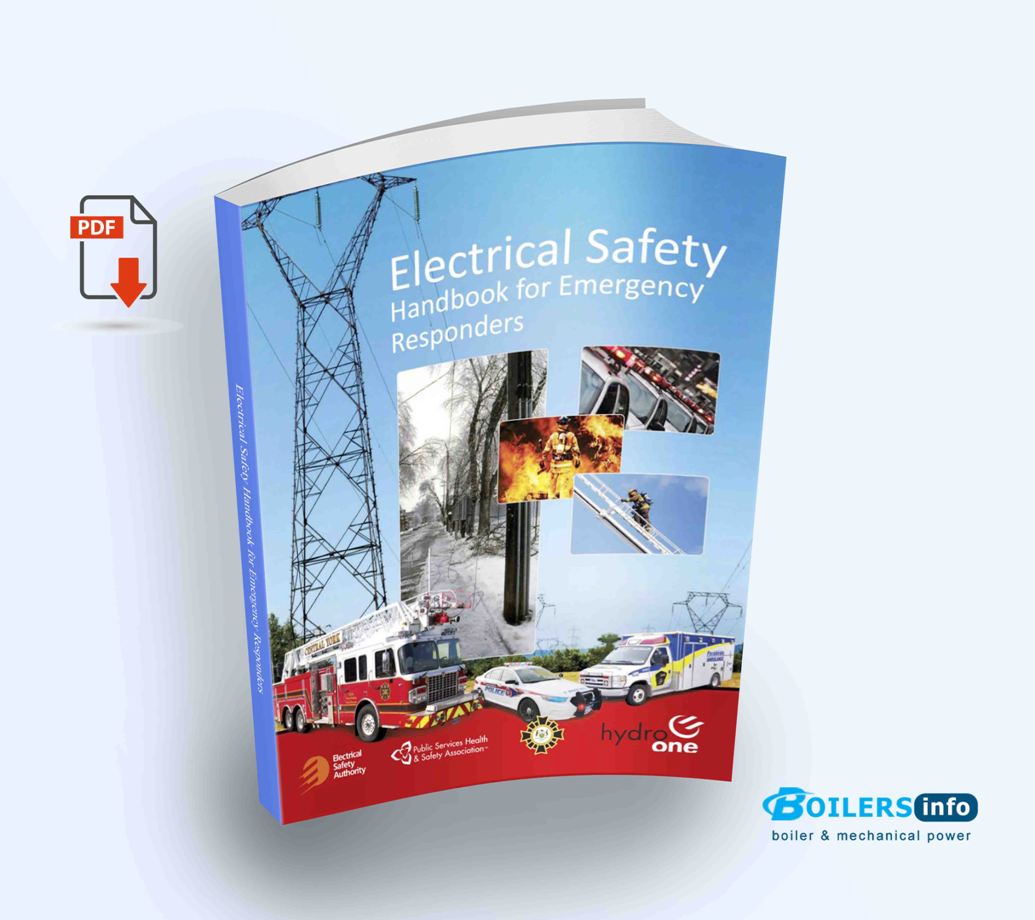
📘 Engineering Guide to Electrical Safety for Emergency Responders
Based on principles covered in the Electrical Safety Handbook for Emergency Responders
Table of Contents
⚡ Electrical Fundamentals Every Responder Must Know
🧠 Effects of Electricity on the Human Body
🦺 Protective Clothing and Electrical Safety Equipment
🔌 Overhead Power Line Hazards and Emergency Scenarios
🕳️ Underground Electrical Equipment Risks
🏭 Substations and High-Voltage Installations
🏠 Electrical Hazards in Buildings and Residential Fires
🌱 Modern Electrical Systems and Distributed Generation
✅ Best Practices for Managing Electrical Hazards
⚡ Electrical Fundamentals Every Responder Must Know
Understanding basic electrical behavior is essential for safe emergency operations:
-
Voltage, Current, and Resistance: Determine shock severity and arc potential
-
Conductors, Insulators, and Semiconductors: Influence how electricity travels through materials
-
Electricity Seeks All Paths to Ground: Not just the shortest path
-
Safe Limits of Approach: Distance is often the most effective protection
Ground Hazards
-
Voltage Gradient: Uneven voltage across ground surfaces
-
Step Potential: Voltage difference between feet
-
Touch Potential: Voltage difference between a grounded object and the body
These effects explain why responders can be injured without directly touching energized equipment.
🧠 Effects of Electricity on the Human Body
Electrical injuries vary depending on voltage, duration, and current path:
-
Muscle Locking: Prevents self-release
-
Cardiac Arrhythmias: Ventricular fibrillation risk
-
Thermal Burns: Internal and external tissue damage
-
Delayed Symptoms: Internal injuries may appear hours later
Medical Considerations
-
Immediate medical evaluation is essential
-
Long-term monitoring is often required
-
Burns may hide deeper tissue damage
🦺 Protective Clothing and Electrical Safety Equipment
Proper PPE significantly reduces risk but does not eliminate it:
-
Electrically Resistant Footwear: Reduces step potential risk
-
Arc-Flash Protective Clothing: Protects from thermal energy
-
Reflective Safety Vests: Improve visibility near roadways and utilities
-
Ground Gradient Control Mats: Used during aerial operations
⚠️ PPE must be clean, dry, and undamaged to remain effective.
🔌 Overhead Power Line Hazards and Emergency Scenarios
Overhead power lines are a leading cause of responder fatalities.
Common Components
-
Distribution lines
-
Fuse cutouts and capacitors
-
Automatic reclosers
Emergency Scenarios
-
Fallen or Low-Hanging Wires
-
Vehicle Accidents Involving Power Lines
-
Electrical Backfeed from Generators
Special Risks
-
Roadway Stripping: Energized surfaces near vehicles
-
Vehicle Tire Pyrolysis: Tires burning internally
-
Electric and Hybrid Vehicles: High-voltage systems remain energized
Clear communication with victims and controlled rescue techniques are critical.
🕳️ Underground Electrical Equipment Risks
Underground systems conceal severe hazards:
-
Padmount Transformers
-
Switching Kiosks
-
Damaged Cables from Digging
Vault Emergencies
-
Fires or smoke emission
-
Explosive cover displacement
-
Oxygen-deficient atmospheres
🚫 Never enter underground vaults without utility confirmation and proper procedures.
🏭 Substations and High-Voltage Installations
Substations contain extreme energy levels even after shutdown:
Key Components
-
Transformers and conservators
-
Bus bars and circuit breakers
-
Ground grids and cable trenches
Emergency Scenarios
-
Fires and explosions
-
Trespassers
-
Personnel emergencies
⚠️ Ground grids reduce—but do not eliminate—step and touch potential hazards.
🏠 Electrical Hazards in Buildings and Residential Fires
Electrical risks increase dramatically during structural fires:
-
Overhead lines near buildings
-
Service meters and masts
-
Flooded or wet environments
Generator Backfeed
-
Portable generators can re-energize utility lines
-
Transfer devices are essential
High-rise buildings introduce additional risks from electrical vaults and vertical cable systems.
🌱 Modern Electrical Systems and Distributed Generation
Renewable energy introduces new responder challenges:
Solar Photovoltaic Systems
-
Panels remain energized in daylight
-
DC voltage is especially hazardous
Wind Turbines
-
Stored rotational energy
-
High-voltage nacelle equipment
Fuel Cells
-
Electrical and chemical hazards combined
Traditional shutdown methods may not fully de-energize these systems.
✅ Best Practices for Managing Electrical Hazards
⚙️ Key Takeaways for Emergency Responders
✅ Assume all electrical equipment is energized
✅ Maintain safe approach distances at all times
✅ Use proper PPE—but never rely on PPE alone
✅ Coordinate closely with utility providers
✅ Control scene access and ground hazards
✅ Stay updated on renewable energy technologies
⚡ Conclusion
Electrical safety for emergency responders is both an engineering discipline and an operational necessity. By understanding electrical behavior, recognizing hazards, and applying proven safety practices, responders can significantly reduce risk while performing life-saving work.
As electrical infrastructure becomes more complex, continuous training and technical awareness remain the strongest tools for responder safety.
If you’d like to explore this topic in more depth, you can download the complete PDF guide 📘 here for easy reading and future reference.